Why Large BGA Reballing Always Causes Cold Joints, Voids, and Misaligned Balls: Yield Control Standards for Industrial-Grade Precision Processing
In the repair and refurbishment chain of high-end industrial control, display, and storage equipment, large-size, high-ball-count BGA reballing is a critical back-end process. It determines whether chips remain stable after SMT placement and whether burn-in tests will require rework. Unlike small BGAs, large BGAs feature larger board sizes, finer ball pitches, and high thermal sensitivity. The most common issues are not "failure to attach," but rather cold solder joints after placement, poor contact during burn-in testing, out-of-spec voiding under X-Ray, or even batch rework during customer system-level testing. Many of these problems are actually rooted in the reballing process itself.
I. 4 Critical Failure Points in Large BGA Reballing
Uneven heating of large chips and incorrect thermal profiles cause varying deformation in the center and corners. This leads to significant height discrepancies after reballing, resulting in one side being firmly pressed while the other is suspended during placement.
1. Board Warpage & Inconsistent Ball Heights
Uneven heating of large chips and incorrect thermal profiles cause varying deformation in the center and corners. This leads to significant height discrepancies after reballing, resulting in one side being firmly pressed while the other is suspended during placement.
3. Uncontrolled Void Rates
Uneven flux application, inadequate baking/dehumidification, or excessive environmental dust cause poor outgassing at the interface after reflow, pushing void rates directly out of spec.
4. Visually Clean but Hidden False Soldering
Relying solely on visual inspection without process control means microscopic bridging and false soldering cannot be detected by the naked eye.
II. Standard Process for Industrial-Grade Large BGA Reballing
① Incoming Board Surface Preparation
Residual solder removal, glue stripping, and pad leveling. If the board surface isn't flat, even the most expensive equipment won't save it later.
② Custom Thermal Profiles Based on Chip Parameters
It's not just about setting the reflow oven to 245°C. Size, thickness, ball count, and substrate material require individually adjusted ramp-up rates, soak zones, and peak zones to avoid local overheating and warpage.
③ Precision Stencils + Vision-Assisted Alignment
Large BGAs require dedicated stencils and machine vision assistance to ensure uniform ball diameters and regular arrangement, minimizing misalignment and bridging.
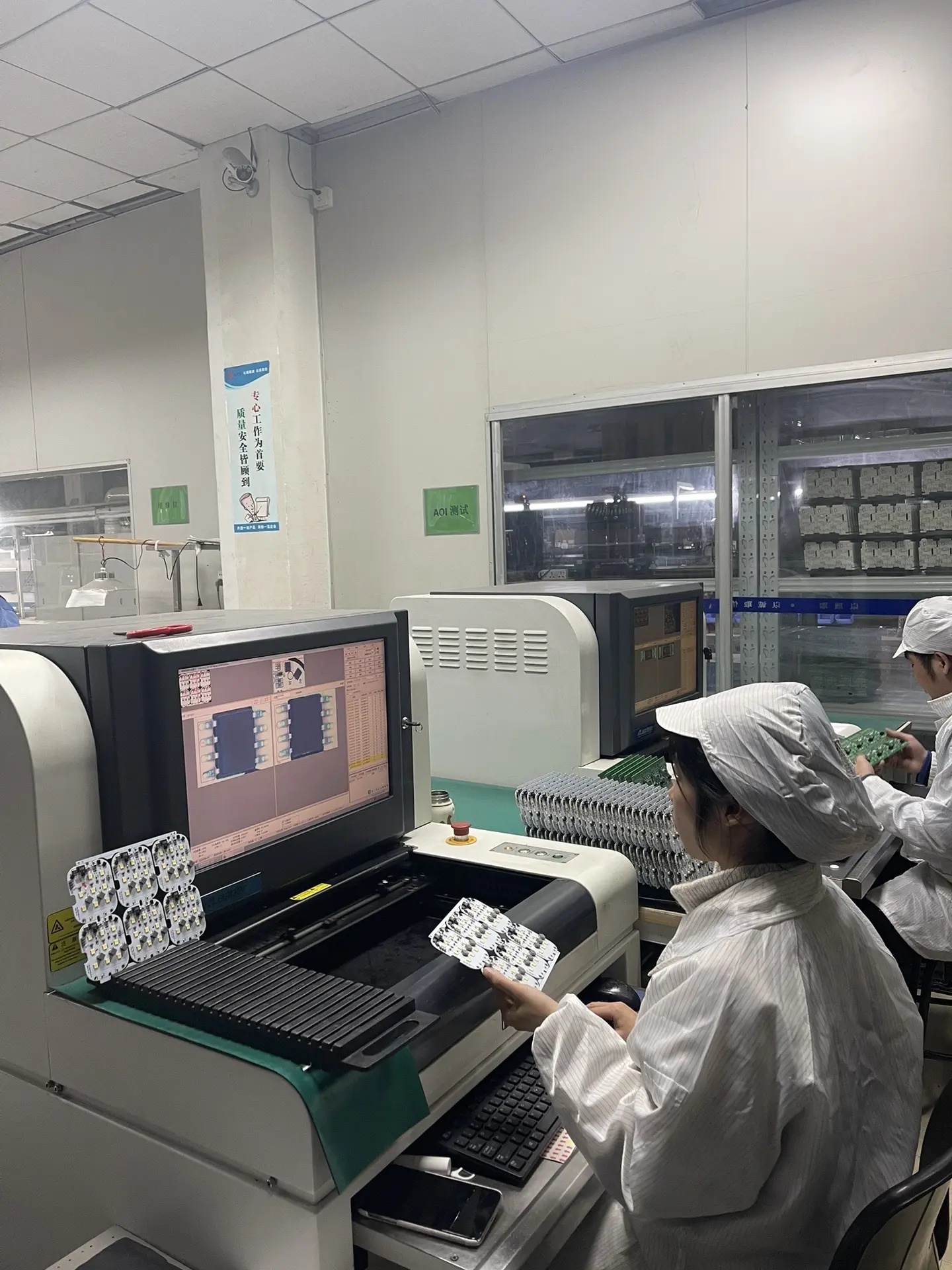
Post-reballing dust removal and visual inspection to screen for bridging, missing balls, and false soldering. Critical components then undergo X-Ray, ball shear, or coplanarity inspection.
III. Target Applications
· Large-size industrial-grade BGA main controllers
· DDR3 / DDR4 / LPDDR memory chip back-end processing
· DDI display driver IC cleaning, reballing, and lead conditioning
· High-ball-count chip precision processing and reliability re-testing for servers / industrial control boards
What we compete on isn't "how many units we ship today," but: yield stability, batch-to-batch consistency, and full traceability from incoming materials to processing, inspection, and shipping.
IV. Why We Emphasize "Standardization"
Many factories don't lack reballing skills; they lack standardization:
· Parameters relying on veteran experience
· Inspection relying on the naked eye
· Shipping relying on luck
BGA reballing is not just a simple repair process; it is the core gateway to industrial-grade chip stability.